

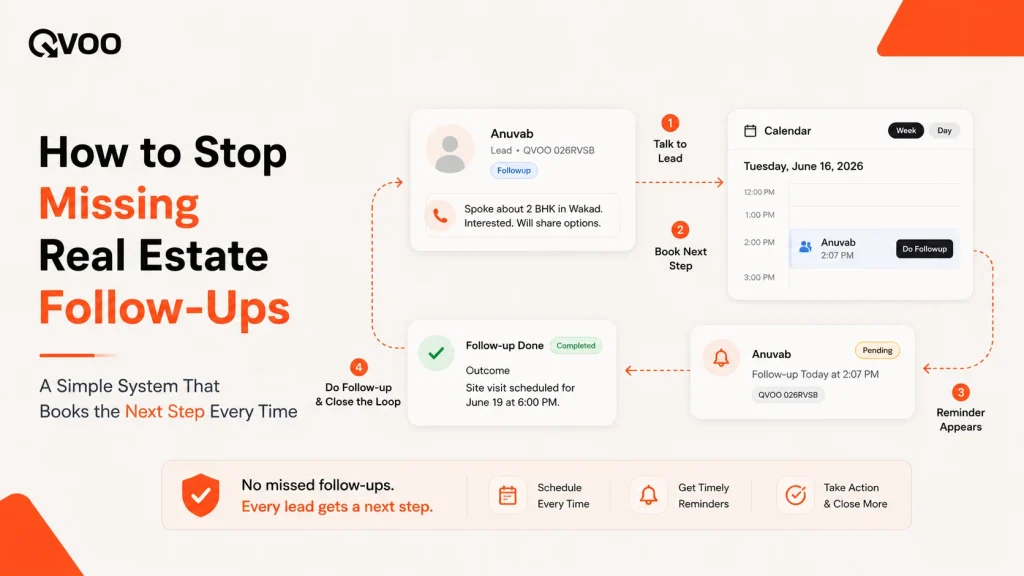
You didn’t lose that buyer on price. You lost them to silence.
Three weeks ago they walked a site with you, liked the 2BHK, asked about the floor plan. You meant to call back. Then Monday’s new enquiries piled up, a booking needed papers, your phone filled with WhatsApp. And this morning they booked the same kind of flat with the broker who called them on Thursday.
This is how most deals actually slip away. Not a bad pitch. A missed follow-up. Industry data across Indian real estate keeps showing the same thing: a large share of leads never get a proper second touch. The buyer was ready. Nobody came back in time.
The fix isn’t working harder or “being more disciplined.” It’s a system a small set of rules that make sure every lead always has a next step on the calendar. Let’s build one.
Why real estate follow-ups slip through the cracks
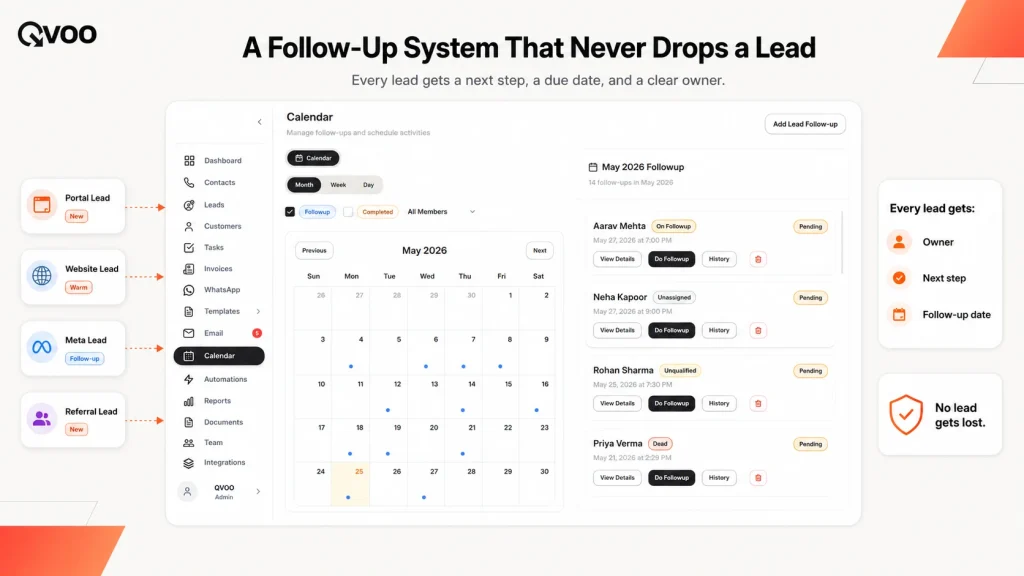
Follow-ups don’t fail because brokers are lazy. They fail because the next step lives in the wrong place.
It’s in your head “I’ll call them tomorrow.” It’s on a sticky note that fell off the desk. It’s buried in a WhatsApp thread that got pushed down by twenty newer chats. It’s in a diary you didn’t open today. The intention was there. The reminder wasn’t.
The busier you get, the worse it gets. A broker handling 10 buyers can hold it together on memory. At 50 or 100 active leads across portals, ads, walk-ins, and channel partners, memory quietly starts dropping people. And the ones who drop are usually the warm-but-not-urgent buyers the exact leads that convert with one more nudge.
So the goal is simple: get every “next step” out of your head and onto something that reminds you at the right time.
What a real estate follow-up system actually is
A follow-up system isn’t software you buy and forget. It’s three rules you actually run.
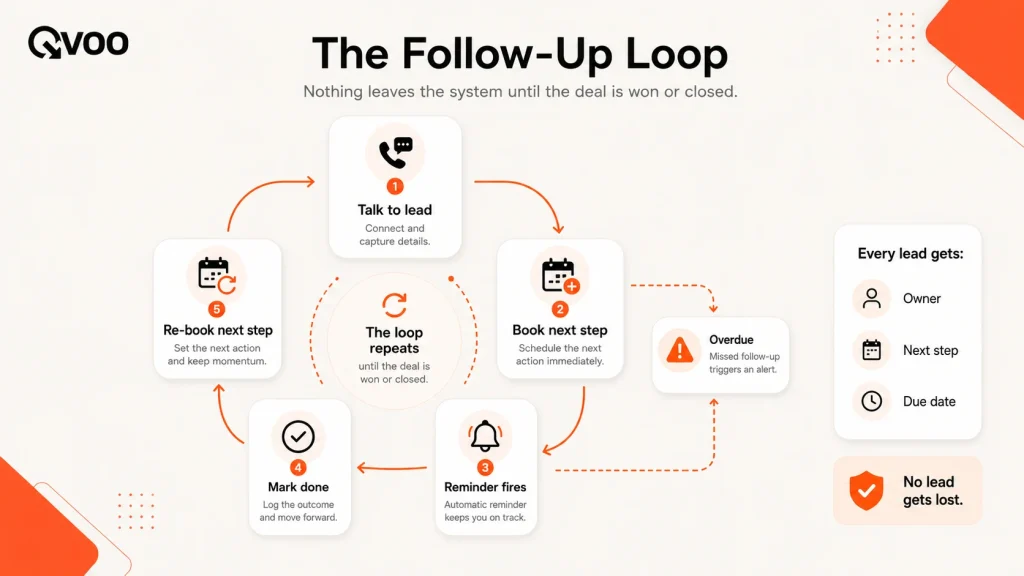
Rule 1 Every conversation ends with the next step booked
Never hang up, never close a WhatsApp chat, without deciding the very next action and putting a date and time on it. “Call Friday 11am to confirm site visit.” “Message Tuesday with the two new launches in his budget.” The conversation isn’t finished until the next step exists somewhere outside your memory.
This one habit removes most missed follow-ups on its own. There’s no such thing as a lead with “no next step” either you’re doing something for them soon, or you’ve decided they’re closed. Nothing floats.
Rule 2 One open next step per lead. Never zero, never five
A lead with zero scheduled steps is a lead you will forget. A lead with five vague reminders is noise you’ll ignore. The healthy state is exactly one clear, dated next action per active buyer. When you complete it, you immediately set the next one. Complete, then re-book every time.
Rule 3 A reminder that actually surfaces
A note you have to go looking for is not a reminder. Your next step should push itself to you a notification when it’s due, and a single daily view that shows everything due today plus anything overdue. If overdue follow-ups quietly disappear from view, they quietly disappear from your revenue.
A follow-up cadence that fits how Indian buyers actually decide
Rules need rhythm. Property is a slow, considered purchase a family weighs budget, location, schools, loan approval, and often two or three other options before booking. Chasing daily feels desperate; going quiet for a month loses them. A sensible default cadence:
- New enquiry: first contact within minutes, not hours. Speed wins the buyer who is comparing brokers right now.
- Interested, not yet visited: touch every 2–3 days share matching options, offer visit slots.
- After a site visit: follow up within 24 hours while the property is fresh, then every few days to handle questions and negotiation.
- Warm but slow (loan, family decision): a lighter touch every 5–7 days so you stay top of mind without pressure.
- Gone quiet: one honest check-in, then move to a monthly “new stock in your budget” nudge instead of dropping them.
Treat these as starting points, not laws a hot buyer with cash gets more attention than a browser six months out. The point is that every stage has a default next step, so no one falls into a gap.
And in India, most of this happens on WhatsApp, not email. Buyers read it, reply on it, and expect updates there. A follow-up “call” is often really a WhatsApp message with the floor plan, the price, and a visit slot.
Your daily 15-minute follow-up routine
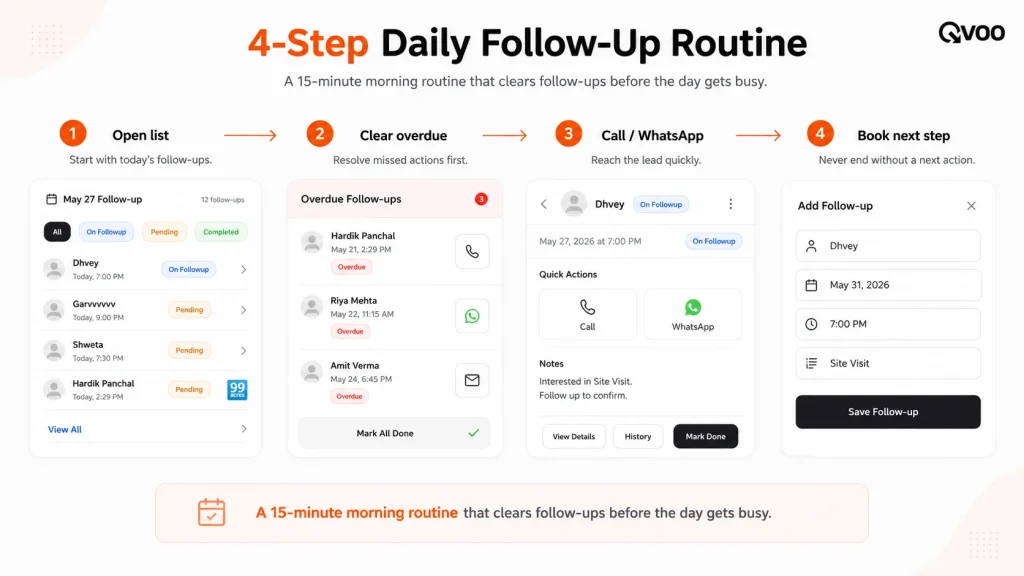
A system only works if you run it the same way every morning. Fifteen minutes, before the day’s chaos starts:
- Open today’s list. See everything due today and everything overdue, in one place.
- Clear overdue first. These are your most-neglected warm buyers. Handle them before new work.
- Do each follow-up call or WhatsApp and the moment it’s done, book the next step. Complete, then re-book.
- Glance at your pending count. If “pending follow-ups” is climbing week after week, you’re taking on more than you’re closing. That’s a staffing or prioritisation signal, not a personal failing.
Do this daily and follow-ups stop being a thing you “try to remember.” They become a list you finish.
How Qvoo keeps every follow-up on the calendar
The three rules are the discipline. A CRM is what makes them effortless to run so the system holds even at 100+ leads.
Qvoo CRM currently helps real estate teams manage enquiries, follow-ups, property leads, sales pipeline, and bookings from one place built on a scalable platform with a broader CRM vision for more industries in the future. Here’s how it supports the follow-up habit specifically.
Book the next step in seconds, right from the lead. When you finish a call, add a follow-up with a date, time, and a note on what to do next. It lands on your Calendar immediately. Site visits work the same way, tied to the property. Your conversation ends with the next step booked Rule 1, done.
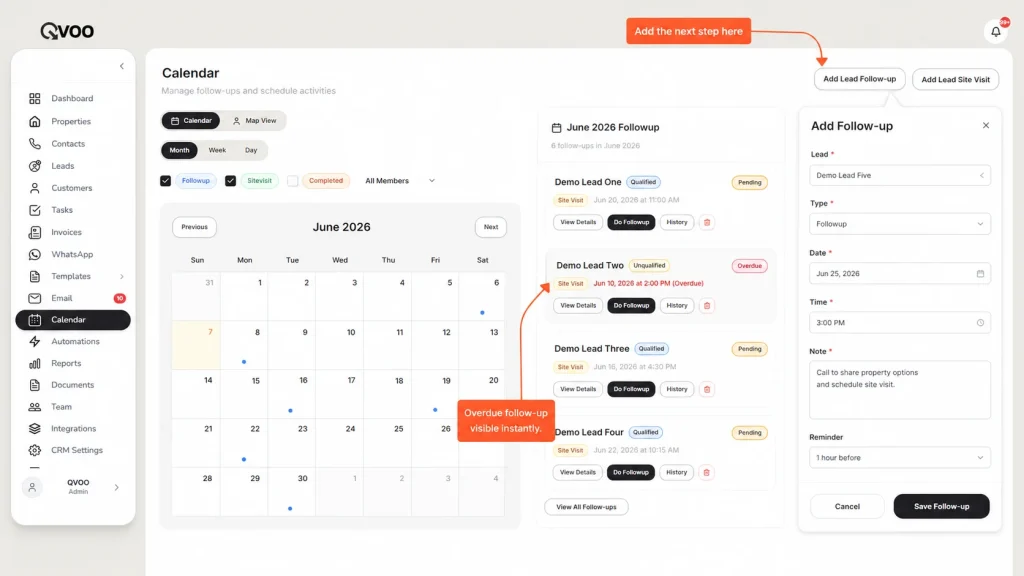
One open next step, enforced. Qvoo blocks a second pending follow-up on the same lead by default, so you don’t end up with a pile of vague reminders. Complete the current one and schedule the next that’s the natural flow, and on mobile a single swipe can close the current step and set the next in one move. Rule 2, built in.
Reminders that surface, and overdue that stays visible. Scheduled follow-ups trigger notifications as they come due, and mark-complete cancels them automatically. Crucially, overdue follow-ups don’t vanish they stay on the Calendar until you actually deal with them. Rule 3, handled.
A daily view and a pending-follow-ups number. The Calendar opens on your pending events, with month, week, and day views and a filter by team member. On the Dashboard, a “pending follow-ups” KPI card shows how many are due real-time, and role-based, so reps see their own and managers see the whole team. Click the card to jump straight to the list. That’s your 15-minute morning routine on a screen.
Every touch on record. Each follow-up scheduled and completed is logged on the lead’s activity timeline, so anyone picking up the lead sees exactly what’s been done and what’s next no “who called this buyer last?” guesswork.
None of this replaces you. Qvoo makes sure the next step is booked, remembered, and visible; the relationship and the close are still yours.
Don’t let another warm buyer book with someone else
Most lost deals aren’t lost they’re forgotten. A follow-up system fixes that with three habits: end every conversation with the next step booked, keep one open step per lead, and start each day from a list of what’s due and overdue. Run it on WhatsApp, where your buyers already are.
Want to see every follow-up sitting on one calendar, with reminders and a live pending count? Book a quick Qvoo demo and watch your next steps stop slipping.
Still missing on Follow-Ups and Leads?
Follow-ups are the key to any good sales. If you are always on time with the follow-ups half of sales process is taken care of, just like QVOO takes care of Follow-Ups, Site Visits, Lead Automations etc. from a single dashboard without ever leaving QVOO CRM.
Explore how QVOO helps you scale:
👉 QVOO Leads
👉 QVOO Calendar & Site Visits
👉 QVOO Team Permissions & Reporting
Frequently Asked Questions
What is a real estate follow-up system?
It’s a simple, repeatable way to make sure every lead always has a scheduled next step. Instead of relying on memory, sticky notes, or WhatsApp threads, you book a dated next action after every conversation, keep one open step per lead, and start each day from a list of what’s due and overdue.
Why do brokers miss follow-ups?
Because the next step lives in the wrong place in their head, a diary, or a chat that gets buried. On memory alone you can manage a handful of leads, but past 50–100 active buyers, warm-but-not-urgent leads quietly drop. Getting the next step onto a calendar with a reminder is what prevents it.
How often should you follow up with a real estate lead?
It depends on the stage. Reply to new enquiries within minutes, touch interested buyers every 2–3 days, follow up within 24 hours after a site visit, and use a lighter weekly touch for slow decisions. Leads who go quiet still deserve a monthly “new options in your budget” nudge rather than being dropped.
Is WhatsApp better than email for real estate follow-ups in India?
For most Indian buyers, yes. They read and reply on WhatsApp far more than email. A follow-up is often a WhatsApp message with the floor plan, price, and a visit slot. Qvoo supports WhatsApp Business follow-ups with approved templates so you can send them quickly.
How does a CRM help with follow-ups?
A CRM like Qvoo lets you book the next step from the lead in seconds, keeps one open follow-up per lead, sends reminders when they’re due, keeps overdue items visible, and shows a live pending-follow-ups count. It turns “trying to remember” into a short daily list you can finish.
What’s the difference between a follow-up and a site visit in Qvoo?
Both live on your Calendar. A follow-up is any scheduled next action a call or WhatsApp message. A site visit is a follow-up tied to a property, with a date, time, and location. You can schedule, get reminders for, and complete either one, and each is logged on the lead’s timeline.