In real estate, your problem is rarely the number of leads. It’s what happens after a lead comes in.
Most teams pour money into property portals, Meta and Google Ads, and referrals. The enquiries arrive. Then they scatter ,some in a spreadsheet, some in WhatsApp, a few in a salesperson’s head. Follow-ups slip. Site visits get forgotten. A buyer who was ready last week goes cold, then books with someone else.
That gap has a name. It’s a missing sales pipeline.
A well-tracked real estate sales pipeline gives you complete visibility from the first enquiry to the final booking. You see where every deal stands, what needs to happen next, and which leads are about to slip. You close more without spending a rupee more on marketing.
Here’s how to build and track one properly.
What Is a Real Estate Sales Pipeline?
A real estate sales pipeline is the structured journey every buyer takes before they book.
Instead of tracking leads across spreadsheets, chat threads, and personal notes, a pipeline organises every lead into clear stages. Each stage tells you exactly where a lead stands and what to do next.
The goal is simple: no enquiry forgotten, no follow-up missed, no deal lost to silence.
The Stages of a Real Estate Sales Pipeline :
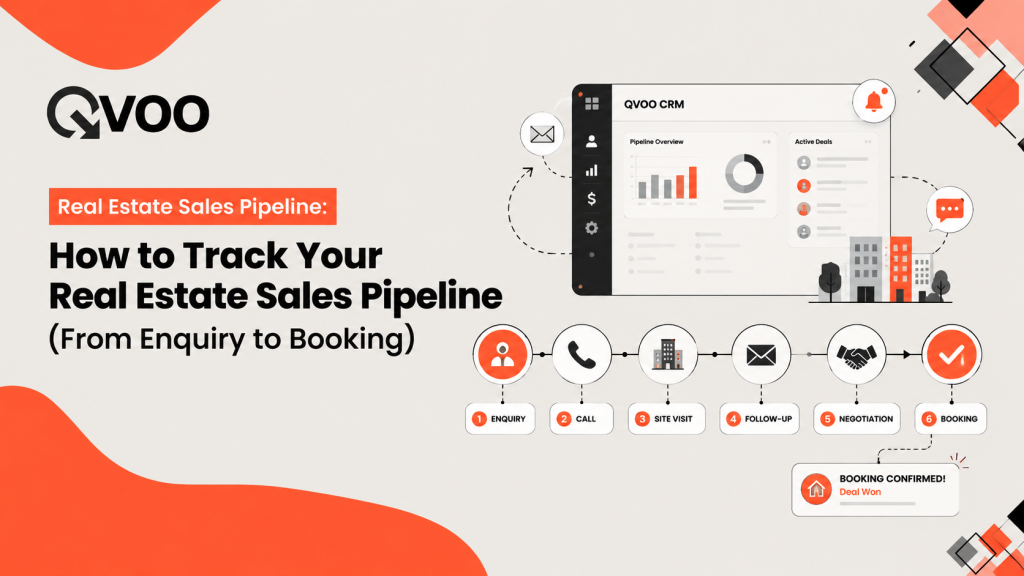
Indian property sales follow a familiar path. Most teams use stages like these:
- New enquiry, a lead lands from a portal, ad, WhatsApp, or walk-in
- Contacted, your team makes first contact
- Qualified, budget, location, and intent are confirmed
- Site visit scheduled, the visit is booked and confirmed
- Site visit done, the buyer has seen the property
- Negotiation, pricing and terms are on the table
- Booking in progress, the buyer commits, paperwork begins
- Closed (won or lost), the deal is booked, or marked lost with a reason
You can rename or trim these to match how your team sells. What matters is that every lead moves through defined stages instead of floating around informally.
Why Real Estate Teams Lose Track of Their Pipeline?
A single deal touches many points. A buyer might enquire on MagicBricks, chat on WhatsApp, visit a site two weeks later, negotiate, and book a month after that.
Without one system holding all of it, visibility disappears. The usual culprits:
- Leads arriving from many sources at once
- Follow-ups tracked by memory
- Site visits managed in a separate diary
- Each agent keeping their own records
- Managers relying on verbal updates
- No clear owner for each lead
Over time these gaps turn into missed follow-ups, slow responses, duplicate calls, weak forecasting, and lower conversions. The leads were never the problem. The visibility was.
How to Track Your Sales Pipeline Effectively :
1. Define clear stages :
Start with a process every salesperson follows. When stages are defined, agents know their next action and managers can spot exactly where deals get stuck. Without them, tracking is guesswork.
2. Capture every lead in one place :
Modern teams get enquiries from everywhere, 99acres, MagicBricks, Housing.com, website forms, Meta and Google Ads, WhatsApp, and walk-ins. Pull all of them into a single inbox. One source of truth means every lead enters your pipeline from day one, with nothing lost between platforms.
3. Respond fast, speed wins deals :
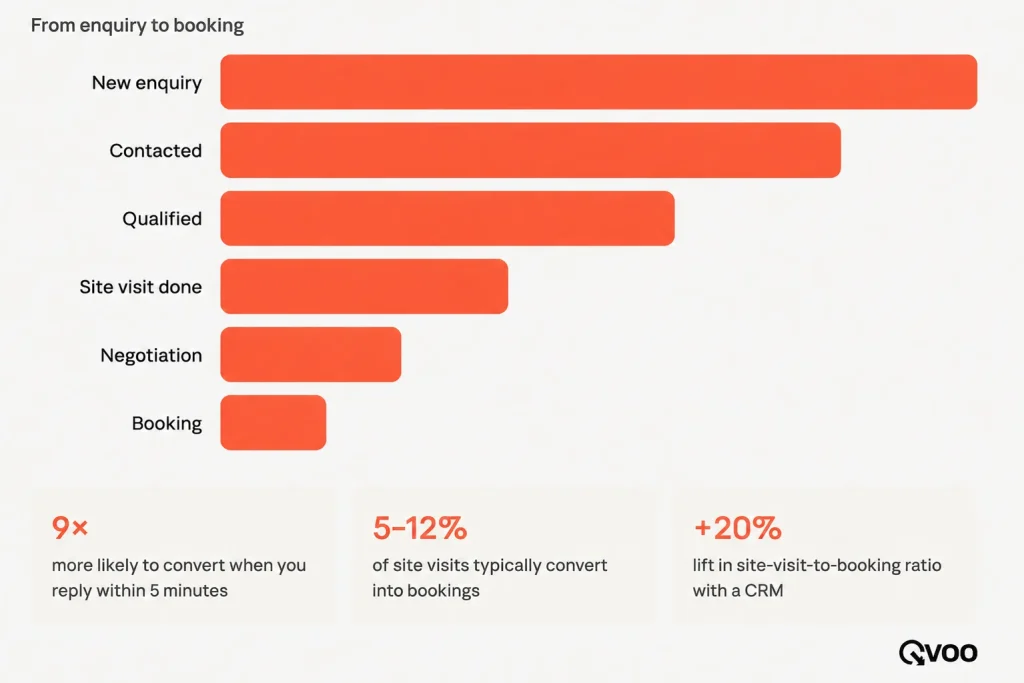
Real estate runs on first response. Studies of property sales suggest that contacting a lead within five minutes makes them far more likely to convert than waiting even half an hour. In a market where several brokers pitch the same inventory, a ten-minute delay can cost the deal. Track response time, and make sub-five-minute contact your standard.
4. Monitor follow-ups consistently :
Most deals are lost to silence, not rejection. Your pipeline should always show upcoming follow-ups, overdue ones, the last interaction, and the next scheduled activity. That lets your team focus on conversations instead of trying to remember who to call.
5. Connect site visits to the pipeline :
Site visits are the strongest buying signal in Indian real estate. Yet many teams track them in a separate sheet. When visits are linked to the pipeline, you can see which leads are progressing, which projects pull the most visits, which visits turn into bookings, and where buyers drop off. That single connection sharpens your entire view of the funnel.
6. Assign clear ownership :
A pipeline without owners turns into chaos. Every lead needs one person responsible for first contact, follow-ups, site visit coordination, and progression. For teams working with channel partners, ownership matters even more, you need to know which partner brought which lead so conversions and commissions are attributed fairly and disputes never start. Clear ownership means faster responses and real accountability.
7. Automate how leads move between stages :
Manual stage updates get forgotten. Stage-wise automation moves the work for you: when a site visit is booked, the lead shifts to “Site visit scheduled” and the buyer gets a reminder. After the visit, a follow-up task is created automatically. When a lead goes quiet, the system flags it. Your pipeline stays accurate without anyone babysitting it.
8. Track conversion at every stage :
A pipeline isn’t just for managing leads, it’s for understanding performance. Track stage-wise conversion to answer the questions that matter: How many enquiries become qualified leads? How many qualified leads visit a site? How many visits become bookings? Where are buyers dropping off? As a benchmark, real estate teams often see a small share of enquiries reach a site visit, and a slice of those visits turn into bookings. Knowing your own numbers tells you exactly where to fix the leak.
Stage-Wise Automation: Let the Pipeline Move Itself
This is where tracking stops being manual work.
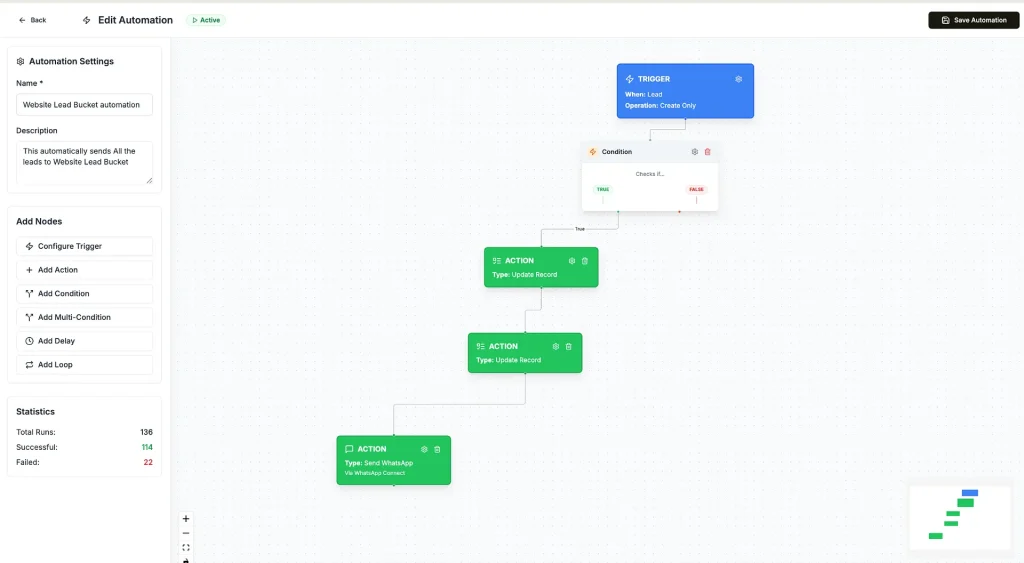
With stage-wise automation, each stage triggers the right action on its own. A new lead gets an instant WhatsApp reply. A scheduled site visit sends a reminder to the buyer and the agent. A completed visit creates a follow-up task. A stalled deal gets flagged before it goes cold.
Your team stops updating a tracker and starts closing deals. The pipeline keeps itself honest.
How a CRM Like Qvoo Tracks Your Whole Pipeline :
As lead volume grows, spreadsheets and WhatsApp groups break down. A real estate CRM brings the entire pipeline into one place, built for how brokers and builders actually sell.
With Qvoo, your pipeline runs end to end:
- Lead capture from every source, auto-pull enquiries from 99acres, MagicBricks, Housing.com, Meta Ads, Google Ads, and website forms, so nothing is missed
- A visual sales pipeline, see every deal across every stage on one board, and spot bottlenecks at a glance
- Stage-wise automation, reminders, follow-up tasks, and lead movement happen automatically
- WhatsApp built in, reply instantly and run follow-up sequences through the WhatsApp Business API
- Site visit scheduling, book, confirm, and follow up on visits inside the same system, with automated reminders
- A live dashboard, real-time view of pipeline health, project performance, and team activity
- Channel partner tracking, know which partner sourced each lead and attribute every conversion correctly
The result is more site visits, faster responses, and full visibility over every deal, without adding complexity for your team.
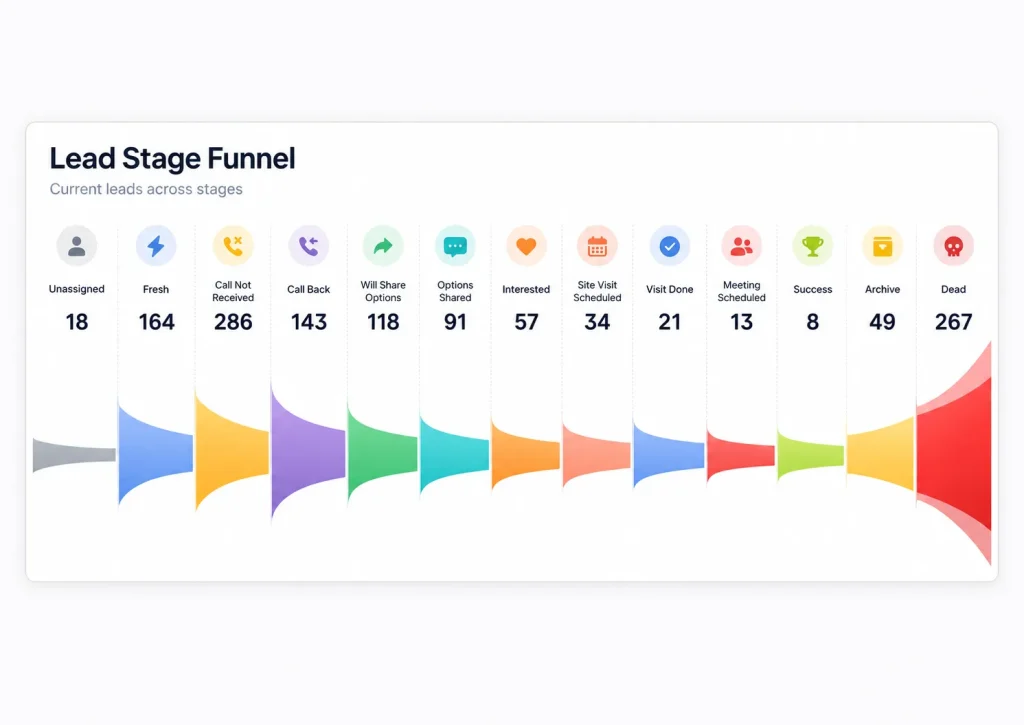
Why Pipeline Visibility Beats Lead Volume :
Most teams assume growth comes from more leads. Often, better visibility gets there faster.
Picture two teams. Team A generates 1,000 leads a month but tracks follow-ups by memory. Team B generates 700 but runs a structured pipeline with disciplined follow-up. In many cases, Team B books more, because their opportunities are actually managed.
Sales growth is usually a visibility problem before it’s a marketing problem.
Building a Scalable Real Estate Sales Process :
As you add projects, agents, and lead sources, the cracks widen. A process that scales needs the same foundations every time:
- Standardised pipeline stages
- Consistent follow-up workflows
- Clear ownership on every lead
- Activity and site-visit tracking
- Stage-wise conversion reporting
Get these right and growth adds revenue, not chaos. Qvoo brings lead management, follow-ups, site visits, communication, and pipeline tracking into one connected workflow, so your process holds together as your team grows.
Final Thoughts :
Tracking your real estate sales pipeline isn’t about organising leads. It’s about seeing your whole customer journey clearly.
When every enquiry, follow-up, site visit, and negotiation is tracked, your team responds faster, prioritises better, and converts more, consistently. The most successful real estate businesses aren’t always the ones with the most leads. They’re the ones who manage their pipeline best.
That’s exactly what Qvoo is built for.Ready to stop losing leads in spreadsheets? Book a free demo at Qvoo.io and see your entire pipeline in one place.
Ready To Upscale Your Business With Personalized Sales Pipeline ?
You already have a business, You just need a proper sales pipeline to upscale your business and increase team’s work efficiency.
QVOO does exactly with more personalization according to your business.
Explore how QVOO can make your business top of the charts :