

In real estate sales, deals don’t fail because of a lack of demand but they do due to lack of Real Estate sales pipeline tracking.
They fail because leads move through the sales journey without structure, visibility, or ownership.
Most real estate teams have leads.
What they don’t have is a clear real estate sales pipeline and tracking system that shows:
- Where each lead stands
- What action is pending
- Who is responsible
- What needs to happen next
Without this clarity, even strong enquiries quietly slip through the cracks.
What Is a Real Estate Sales Pipeline?
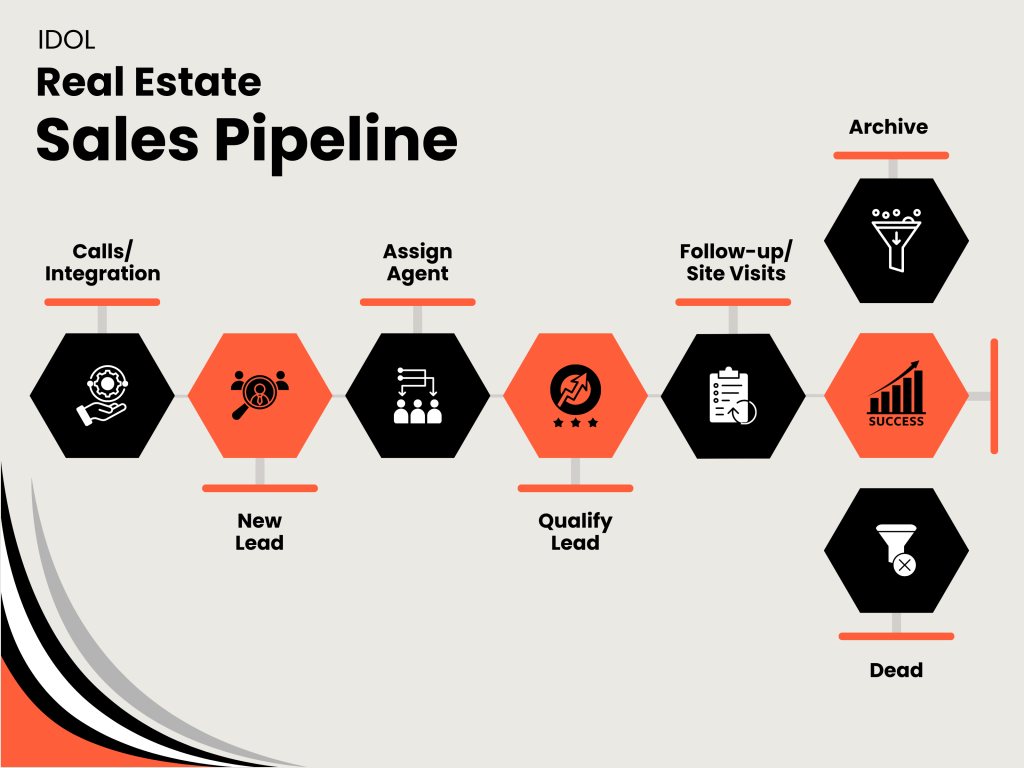
A Real Estate Sales Pipeline is the step-by-step journey a lead takes – from the first enquiry to final closure.
Typical pipeline stages include:
- New enquiry
- Contacted
- Qualified
- Site visit scheduled
- Negotiation
- Closed / Lost
The goal of pipeline tracking is not just organization but it’s predictability.
When teams can see how leads are moving, they can act faster, follow up better, and close more consistently.
Why Real Estate Sales Pipeline Tracking Breaks Down in Business?
Despite its importance, many real estate teams struggle with pipeline tracking due to:
- Leads coming from multiple sources (portals, WhatsApp, referrals)
- Follow-ups managed through calls and personal chats
- No single place to view lead history
- Managers relying on verbal updates
This leads to:
- Missed follow-ups
- Unclear accountability
- Inaccurate forecasting
- Reactive instead of proactive sales management
A proper Real Estate CRM with pipeline tracking solves this by turning scattered activity into a visible system.
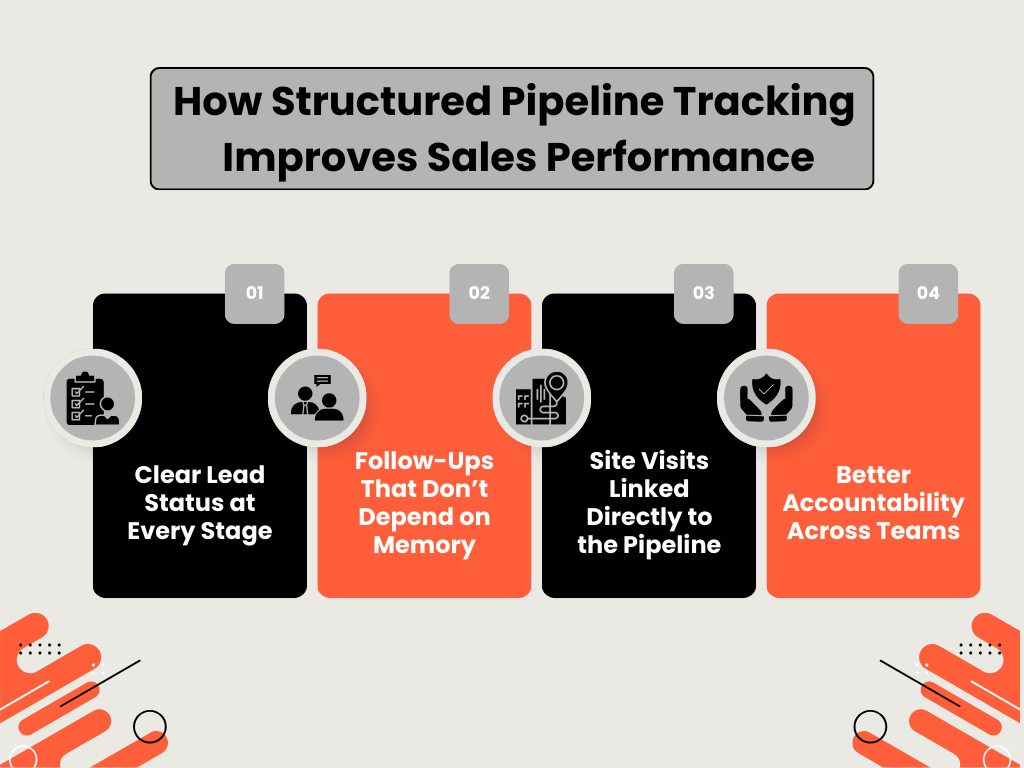
How Structured Pipeline Tracking Improves Sales Performance?
1. Clear Lead Status at Every Stage
When each lead is assigned a stage, agents always know:
- Who needs a call today
- Which leads are stuck
- Which deals are close to conversion
This removes guesswork and replaces it with clarity.
QVOO allows teams to manage leads through defined pipeline stages that reflect how real estate sales actually happen without unnecessary complexity.
2. Follow-Ups That Don’t Depend on Memory
In many teams, follow-ups rely on reminders in WhatsApp or personal notes.
This works until the volume increases.
Pipeline tracking ensures:
- Every follow-up is logged
- Timelines are visible
- Nothing is forgotten
With automated reminders and activity history, QVOO helps teams stay consistent even as lead volume grows.
3. Site Visits Linked Directly to the Pipeline
Site visits are a critical turning point in real estate sales but often they’re tracked separately or not at all.
When site visits are part of the pipeline:
- Agents know which leads are progressing
- Managers can see real movement
- Follow-ups become contextual
QVOO links site visits and schedules directly to the lead, making pipeline movement meaningful instead of symbolic.
4. Better Accountability Across Teams
A visible pipeline makes ownership clear.
Managers can instantly see:
- Which agent owns which lead
- Where delays are happening
- Which stages need intervention
Agents know their responsibilities without constant follow-ups from leadership.
This balance of visibility and autonomy is essential for scaling real estate teams.
Sales Pipeline Tracking Is Not Just for Managers
While managers use pipelines for forecasting, agents benefit just as much.
For agents, a structured pipeline means:
- Less mental load
- Clear daily priorities
- Better conversations with clients
- Higher confidence during follow-ups
QVOO’s pipeline design focuses on usability, so agents actually use it instead of bypassing it.
Integrating Communication into the Sales Pipeline
A pipeline works best when communication lives inside it.
In real estate, WhatsApp is the primary sales channel, not email or formal tools.
QVOO integrates WhatsApp communication directly with leads, allowing:
- Conversations to stay attached to the pipeline
- Context to remain intact
- Teams to collaborate without switching platforms
This ensures pipeline tracking reflects real activity and not just status changes.
Tracking Performance Without Micromanagement
One of the biggest fears around pipeline tracking is micromanagement.
In reality, a well-designed pipeline:
- Reduces manual reporting
- Eliminates repetitive status updates
- Encourages ownership
QVOO gives managers visibility without interfering in daily agent workflows and creating trust instead of pressure.
Why Real Estate Teams Need Pipeline Tracking Before They Scale !
Scaling without structure magnifies chaos.
As teams grow:
- Lead sources increase
- Agent count rises
- Follow-up complexity multiplies
Without a defined sales pipeline, growth leads to confusion instead of revenue.
A CRM like QVOO provides the foundation teams need to scale without losing control or clarity.
Pipeline Tracking Is a Sales Discipline, Not a Feature
A Real Estate sales pipeline and tracking system is not about software but it’s about discipline.
The right CRM supports that discipline by:
- Making progress visible
- Keeping communication contextual
- Ensuring follow-ups happen on time
QVOO supports real estate teams by aligning pipeline tracking with how sales actually happen – simple, structured, and practical.
When visibility improves, conversions follow naturally.
If your real estate sales pipeline feels unclear or difficult to track, the right system can make all the difference. Explore how QVOO brings structure, visibility, and consistency to everyday sales workflows.